
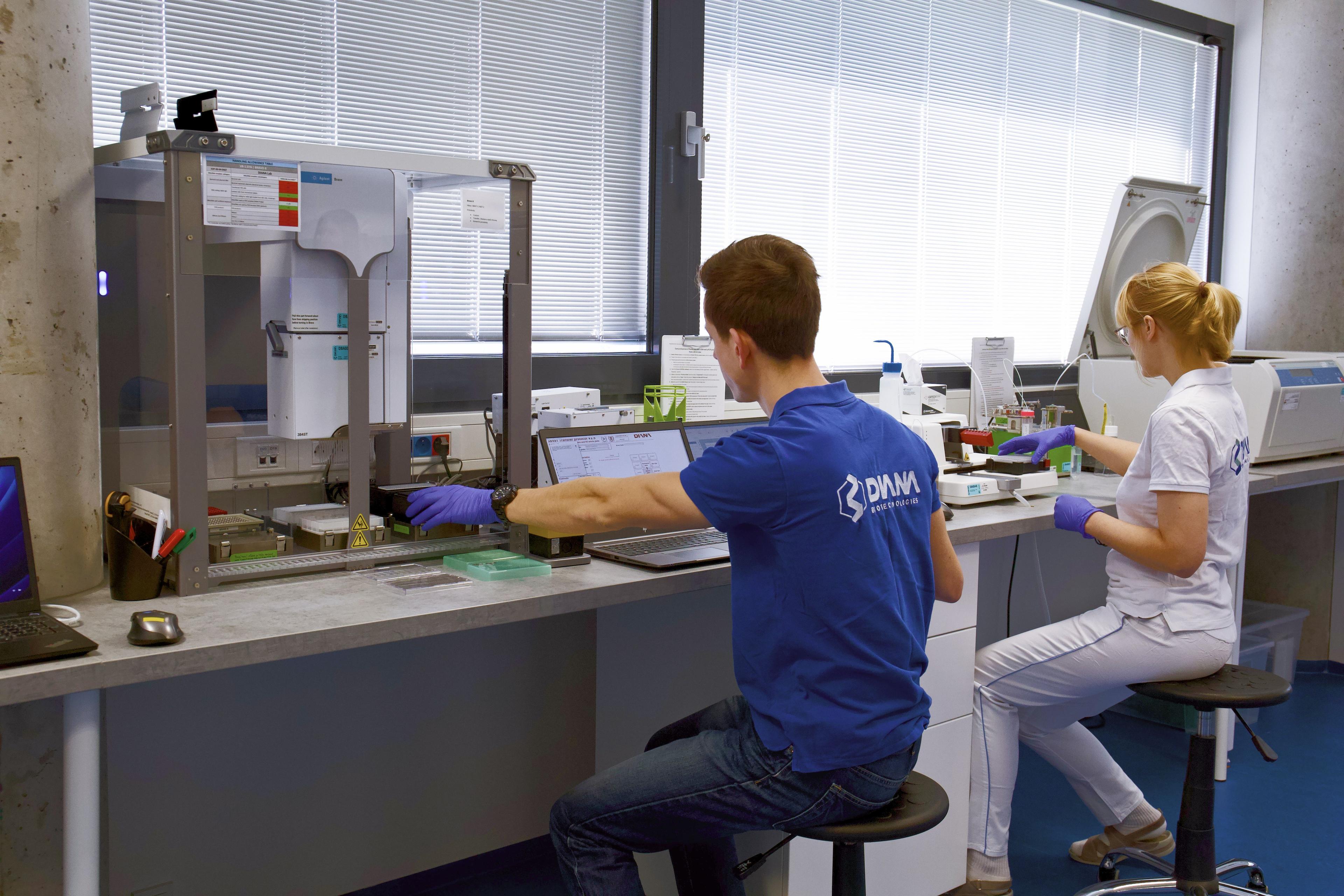
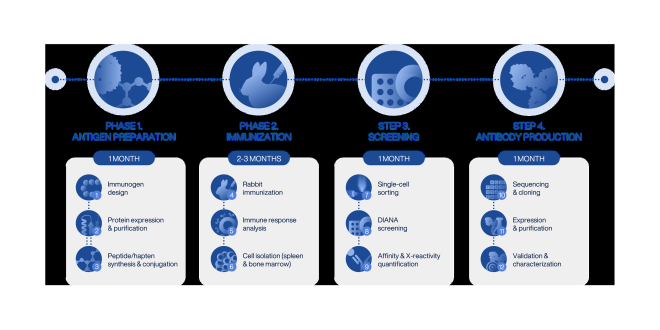
We develop custom rabbit recombinant monoclonal antibodies for demanding research, diagnostic, and early therapeutic discovery applications. Our workflow brings together three critical elements of successful antibody development: tailored immunogen preparation (including hapten synthesis), antigen-positive single plasma cell sorting, and proprietary DIANA-Ab single-cell HTS.
By identifying the best-performing clones directly from single plasma cells before cloning, DIANA-Ab helps reduce downstream uncertainty and focus resources on antibodies with the desired binding profile.
The resulting rabbit recombinant antibodies combine the strengths of rabbit immune responses with the consistency of recombinant production. Compared with conventional mouse hybridoma workflows or display-based discovery, they offer high affinity, recognition of a wider range of targets (including small molecules), genetic stability, scalability, and reliable lot-to-lot consistency.
Prefer to read everything in PDF? Download our materials:
CUSTOM ANTIBODY DEVELOPMENT
Every custom antibody project starts with understanding your target, application, and performance requirements. Our team evaluates the technical feasibility, proposes the most suitable development strategy, and defines a clear project plan before the work begins. Explore the steps below to see how we guide each project from first discussion to formal quote. ⬇️

STEP 1: Target Disclosure
Share your target details, intended application, affinity and cross-reactivity requirements, and downstream assay needs. Based on this information, our team can assess feasibility and recommend the most suitable development strategy.
STEP 2: Project Strategy Presentation
Our experts prepare a project strategy tailored to your target and application. The proposal outlines the recommended immunogen design, screening approach, key development steps, estimated timeline, expected deliverables, and indicative pricing, giving you a clear view of how the project would be executed.
STEP 3: Technical Alignment and Q&A
Before moving forward, we align with your team technical details, project assumptions, success criteria, and practical requirements. This step ensures that the development strategy matches your expectations, and that open questions are addressed before the final quote.
STEP 4: Formal Quote
After technical alignment, we provide a formal milestone-based quote with defined scope, pricing, timelines, and deliverables for each development phase. Part of the project fee can be linked to predefined success criteria, such as target affinity, cross-reactivity profile, or performance in the customer’s application, helping share development risk while keeping the process transparent from the first step onward.
Technology
DIANA-Ab single cell discovery platform is suitable for diverse antibody discovery projects and technology integration
The DIANA-Ab platform extends high-throughput single-cell screening beyond standard antibody discovery. Its flexible workflow can be adapted to diverse discovery projects, from advanced binding-property screening and assay-ready antibody pair selection to integration with existing or future discovery campaigns. By combining single-cell resolution with adaptable screening design, DIANA-Ab helps identify well-characterized monoclonal antibody candidates for demanding therapeutic, research, and diagnostic applications. ➡️ DIANA-Ab platform
Ingo Greger, PhD
Group Leader at MRC LMB
Monoclonal Antibodies Development: References
Our DIANA-Ab technology has supported antibody discovery and development projects across academic research, biotechnology, diagnostics, and industrial collaborations. These partnerships reflect the flexibility of our platform and our ability to address diverse targets, applications, and project requirements.
INTERESTED IN COLLABORATION?

Head of Antibodies
Vojtech Vyklicky

Contact us