
The right antibody can make the difference between uncertain results and reliable analysis. But identifying a truly specific, high-affinity monoclonal antibody is often a complex and time-consuming process, particularly for challenging targets such as small molecules.
DIANA-Ab was developed to overcome these challenges.
Our proprietary integrated discovery pipeline combines antigen-positive single plasma cell sorting by FACS with DIANA-Ab high-throughput screening. By screening the full rabbit spleen or bone marrow clone repertoire, we can identify rare, high-performing antibody clones with the affinity and specificity needed for your application.
With DIANA-Ab, antibody discovery becomes more focused, more comprehensive, and more likely to deliver the right monoclonal antibody for your target.
Discover the technology behind DIANA-Ab and explore selected case studies of estrone and GluA1 mAb development.
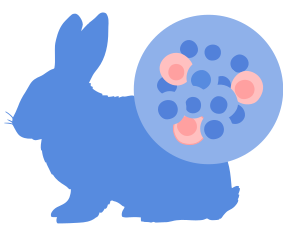
Rabbits are immunized with proteins, mRNA, or carrier-linked peptides and haptens. Spleen or bone marrow tissue is then isolated and processed to obtain cells containing antibody-producing plasma cells.
ADVANCED ANTIBODY DISCOVERY FOR DIFFICULT TARGETS
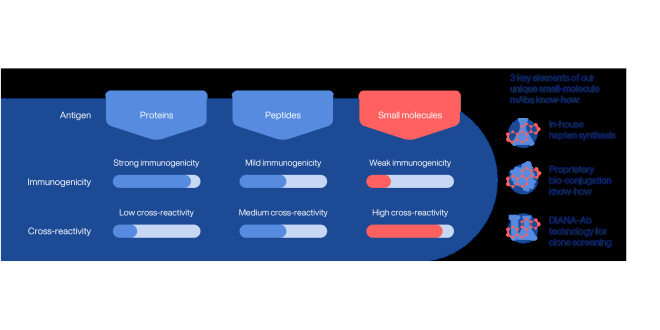
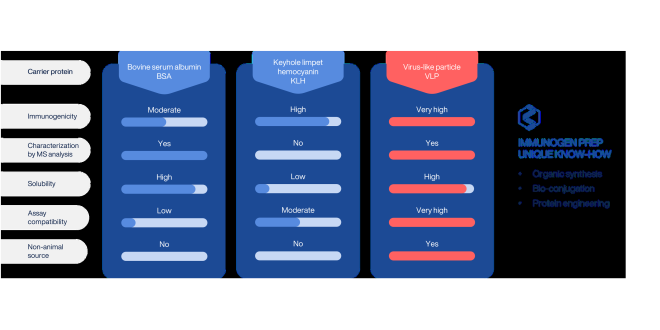
Small molecules and other low-immunogenic targets require more than a standard antibody discovery workflow. DIANA-Ab combines advanced in-house chemistry capabilities, proprietary bioconjugation know-how, and high-throughput screening of single plasma cells to identify high-affinity, target-specific monoclonal antibodies against these challenging targets.
Download the full booklet ➡️ Custom mAb Development
CASE STUDY

Step 1
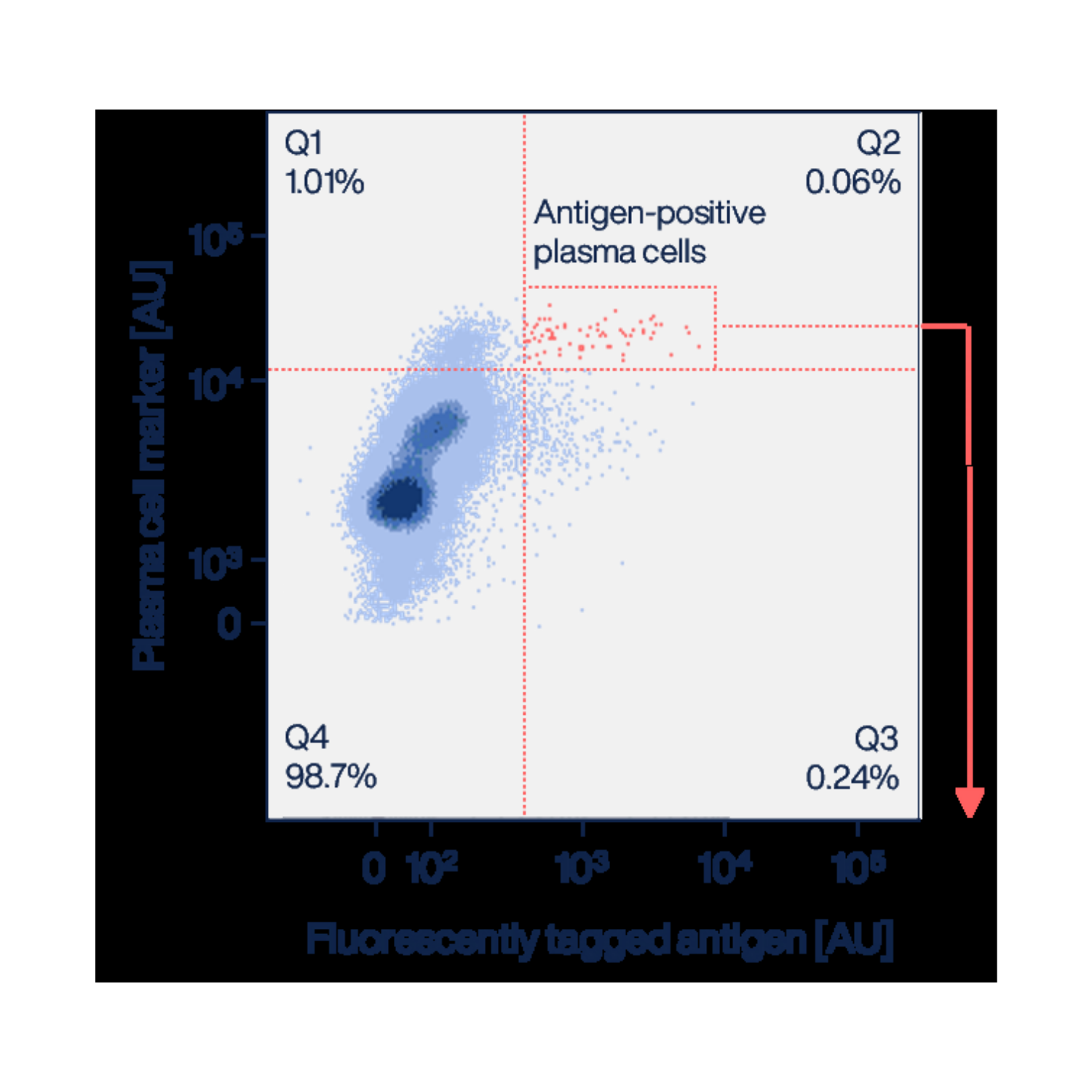
FACS analysis enables identification of a rare antigen-positive plasma cell population based on fluorescently tagged antigen binding (x-axis) and plasma cell marker intensity (y-axis). In this case study, the antigen-positive plasma cell gate represents only approximately 0.06% of analyzed cells, providing a highly focused selection of rare target-specific antibody-producing cells. This rare plasma cell population is enriched for affinity-matured antibodies, making it an ideal starting point for downstream DIANA-Ab screening.
Step 2
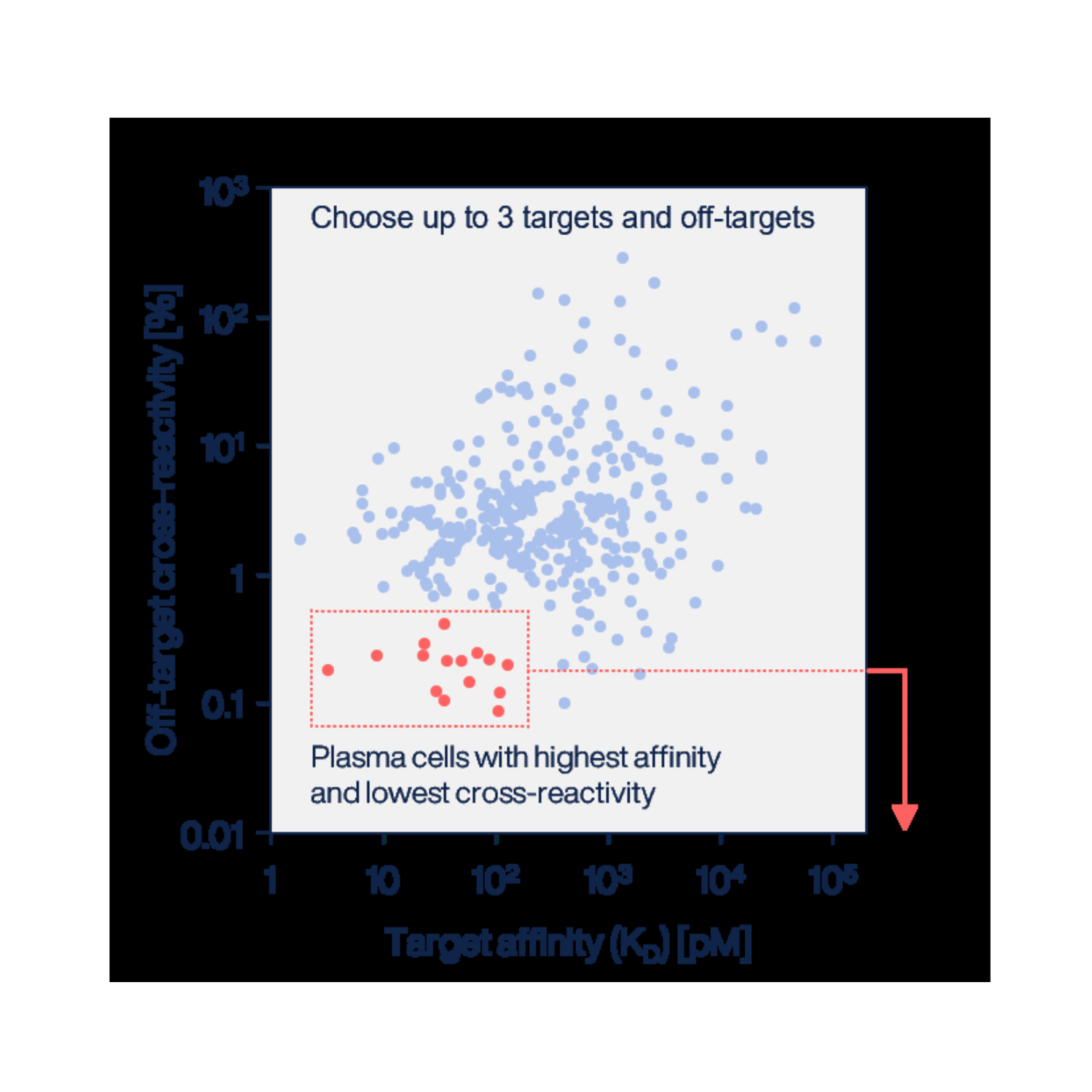
The ultrasensitive DIANA-Ab HTS platform analyzes antibody binding properties directly at the single-cell level. Affinity is measured by determining Kd values for the target, while cross-reactivity is assessed against selected off-target molecules. In this case study, single-cell lysates were screened against the target steroid hormone and two closely related structural analogues. This enabled identification of clones with high target affinity and minimal cross-reactivity prior to cloning, without the need for cell cultivation. The plot shows target affinity expressed as Kd (x-axis) and cross-reactivity with one selected structural analogue (y-axis).
Step 3
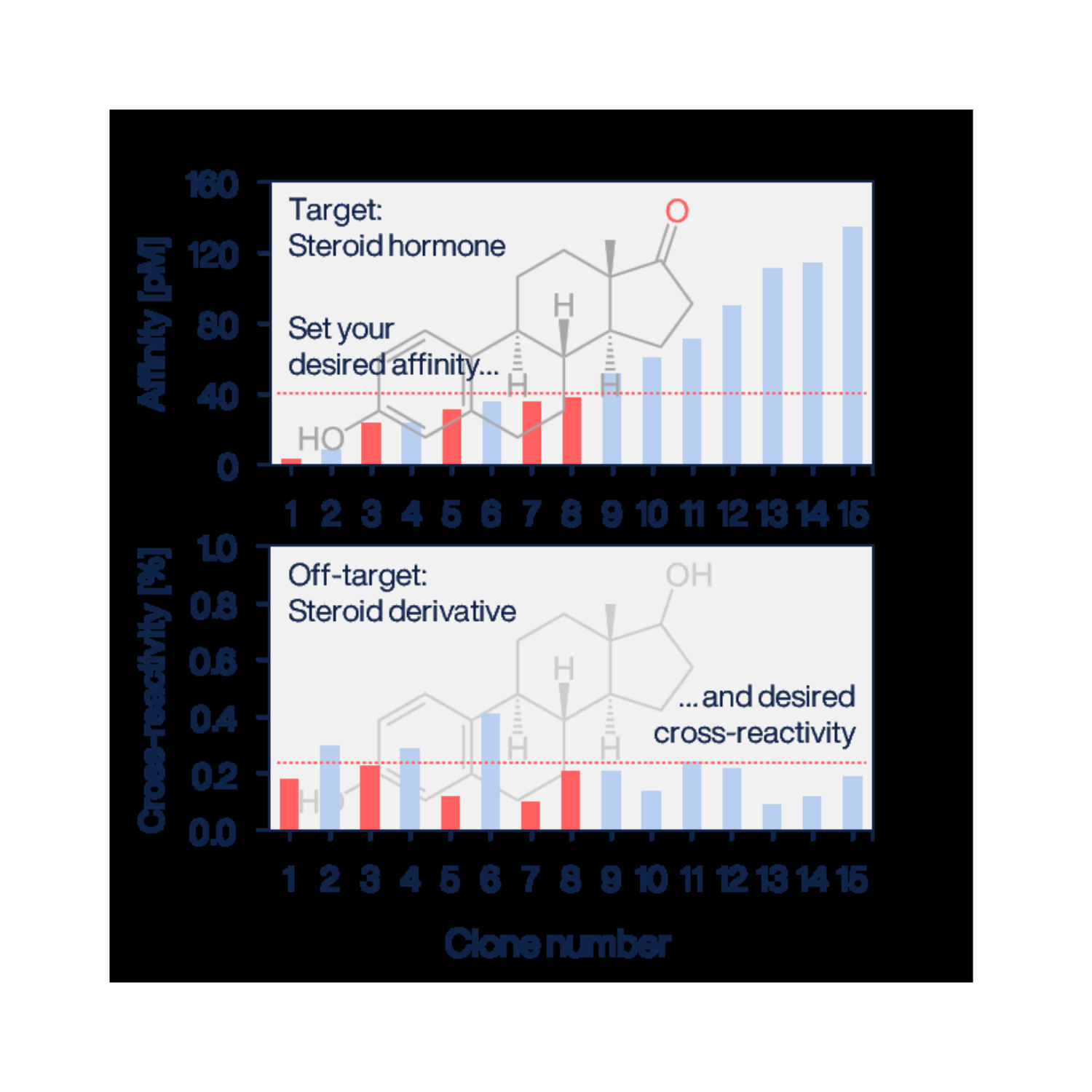
Top-performing clones were prioritized based on high affinity for the target steroid hormone and minimal cross-reactivity with closely related structural analogues. Based on DIANA-Ab screening results, the 15 best-performing clones were selected for sequencing, cloning, and expression in HEK293 cells. After purification, each antibody was validated by SDS-PAGE and binding analysis, including Kd determination for the target steroid hormone and cross-reactivity assessment against selected structural analogues. The final 5 clones were selected based on the desired affinity, cross-reactivity profile, and sequence diversity.
Technology
DIANA-Ab single cell discovery platform is suitable for diverse antibody discovery projects and technology integration
The DIANA-Ab platform extends high-throughput single-cell screening beyond standard antibody discovery. Its flexible workflow can be adapted to diverse discovery projects, from advanced binding-property screening and assay-ready antibody pair selection to integration with existing or future discovery campaigns. By combining single-cell resolution with adaptable screening design, DIANA-Ab helps identify well-characterized monoclonal antibody candidates for demanding therapeutic, research, and diagnostic applications.

Screen for antibodies with advanced binding properties, including selectivity for holo versus apo protein forms, pH-dependent binding, or temperature-dependent binding behavior. This enables discovery of antibodies tailored to functional assays, conformational targets, and demanding application conditions.
Identify complementary antibody pairs that bind compatible epitopes on the same antigen and enable sandwich assay development, a preferred format for many diagnostic applications requiring high sensitivity, specificity, and assay robustness. DIANA-Ab HTS can provide a broad panel of complementary antibody pairs, giving you multiple options for sandwich assay development and optimization.
Enable monoclonal antibody discovery from frozen splenocytes, bone marrow cells, and other relevant cell populations, including material generated as part of your polyclonal antibody campaigns. This allows valuable immune material to be preserved, revisited, and screened by DIANA-Ab HTS, reducing the need for repeating immunization campaigns.
Apply the DIANA-Ab workflow across antibody discovery projects using rabbits, rodents, humans, or camelids (VHH), enabling flexible integration with different antibody sources and discovery strategies.
INTERESTED IN COLLABORATION?

Head of Antibodies
Vojtech Vyklicky

Contact us